Wondering if commercial tree farming or sustainable forestry is a good Investment in Kenya?
The African continent stands at a pivotal junction, driven by rapid urbanization, an expanding middle class, and massive infrastructure projects. This surging development has put unprecedented strain on one core resource: wood and forestry products. For decades, the narrative surrounding African forests has centered on deforestation and conservation. However, a new, critical narrative is emerging—one centered on sustainable industrial forestry, innovative value addition, and phenomenal investor returns.
This is not a peripheral sector; it is the backbone of Africa’s construction and manufacturing future. The gap between supply and soaring demand has created a staggering economic opportunity. Current projections suggest Africa faces a $30 billion wood deficit by 2030.
This comprehensive guide is engineered for entrepreneurs and institutional investors seeking to deploy capital in high-growth, high-impact sectors in Kenya and across Africa. We aim to serve as your definitive, go-to source for understanding the forestry products value chain, its profitability drivers, and the essential costs required to secure your position in this vital market.
I. Is there a market for Forest and Tree Products in 2026?
Are you wondering if its profitable to invest in the Kenya’s forest sector? In the sections below, We show you how you can make money in various businesses of tree growing, timber harvesting, furniture making and other non forest products such as honey harvesting.
1. Tree Nursery Businesses and commercial tree farming
You’ll either supply certified tree seedlings or grow commercial tree species yourself. One of the fastest-growing agribusiness opportunities in Kenya today is microforestry.
Farm Forestry (Microforestry)
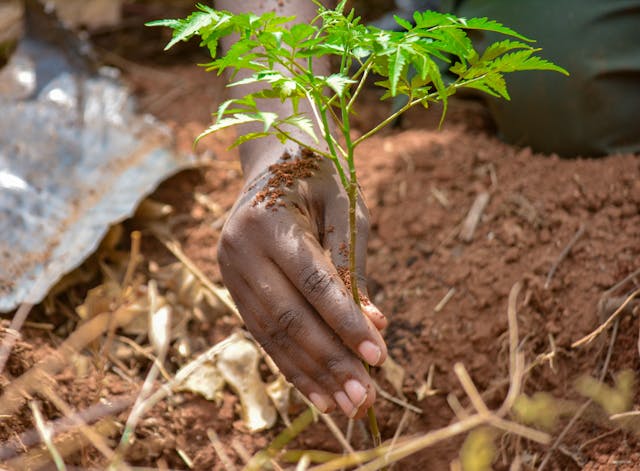
Microforestry is transforming how commercial tree farming works in Kenya. Instead of starting a large plantation, as a company you can partner with thousands of smallholder farmers to grow trees on idle or underused land. Using digital platforms such as Furaha and baraka farms, they will help farmers manage planting, monitoring, and harvesting more efficiently.
Popular tree species include:
- Eucalyptus — widely grown for poles, charcoal, timber, and construction use.
- Grevillea robusta — valued for its fast growth, straight timber, and soil-friendly characteristics.
Why It’s Profitable
Tree farming has a relatively low entry barrier compared to many agricultural businesses. Farmers can start small, expand gradually, and earn significant long-term returns.
For example, seedlings worth about KES 200 can potentially generate around KES 8,200 after harvest roughly 10 years later. That makes commercial tree farming attractive for long-term wealth building, especially for landowners with unused acreage.
2. Secondary Sector: Industrial Processing and Bulk Commodities
This sector takes the harvested logs and converts them into intermediate products for industrial use.
- Sawmilling and Timber Processing: This involves converting logs into standardized sawn timber. With demand for building timber expected to climb by over 40 percent in Kenya.
- Timber Treatment and Poles: Treated wood poles are critical for power transmission (Kenya Power), communication (interner fiber masts), and fencing. Treating wood against pests and moisture adds significant value and extends the product lifespan, making it highly profitable.
- Wood-Based Panels (Plywood, MDF): The market for engineered wood products (plywood, medium-density fiberboard, particleboard) is booming, driven by modern construction and furniture industries such as affordable housing that require standardized, consistent materials.
3. Tertiary Sector: Value-Added Manufacturing
This is where the highest profit margins lie, transforming raw and intermediate products into finished goods.
- Modern Furniture Manufacturing: Valued at approximately US$452 million annually in Kenya, the wood furniture industry is poised for growth, but requires innovation and upgraded technology to move away from low-productivity production towards serial manufacturing. The opportunity is in meeting the demand for high-quality, durable, and stylish furniture that competes with increasing mass-market imports.
- Charcoal and Biomass Briquettes: Serving the massive energy market, especially in urban areas. Investment in clean, efficient briquetting technology using wood waste offers a sustainable and highly scalable business model.
4. Non-Timber Forest Products (NTFPs)
NTFPs offer a critical diversification route and quick revenue streams for small enterprises and rural communities.
- Key NTFPs in Africa: Gum Arabic, resins, indigenous fruits, honey and bee products, medicinal plants, rattan, and bamboo. Investment here focuses on packaging, branding, and establishing export-grade quality control for these specialty products.
II. The Profitability Nexus: Why Forestry Investment Works in Africa
The economics of African forestry products are compelling, rooted in a structural demand-supply imbalance and high potential for local value addition.
The Economic Value Proposition
| Metric | Context | Implication for Investors |
| Market Shortfall | $30 Billion wood deficit in Africa by 2030. | Guaranteed high demand and pricing power for reliable suppliers. |
| National Contribution | The sector contributes ~3.6% to Kenya’s GDP, yielding over KSh 20 billion annually. | A stable, nationally important sector that attracts government focus and incentives. |
| Value Addition Return | Processing 1 cubic metre of sawnwood into finished furniture can add US$ 44-271 in local value. | The profit margin dramatically increases with vertical integration (log to final product). |
| Rural Livelihoods | NTFPs and farm-forestry provide 20% to 50% of total household income in some developing areas. | Investment creates strong social impact (ESG) and secures diverse supply chains from rural economies. |
The Long-Term Asset Growth Advantage
Unlike many manufacturing businesses, tree growing (the raw material base) is a long-term asset investment. Trees increase in value exponentially as they grow, offering a natural hedge against inflation and a low-maintenance asset class once established.
For processing businesses, the profitability comes from solving the quality problem. By introducing modern kilns for drying and precise machinery, manufacturers can achieve internationally recognized standards (e.g., 6–9% moisture content for indoor uses), accessing lucrative export and high-end construction markets that currently rely on imports.
III. How Profitable is a Timber Processing Business in Kenya
To be a go-to source, we must provide concrete, actionable financial data. This model is for a Mid-Tier Urban Workshop (focusing on processing logs into specialty wood, treatment, and basic furniture components), targeting the high-demand construction and furniture hubs near Nairobi or Mombasa.
(All estimates are approximate and rounded to the nearest thousand, based on compiled market data in Kenya Shillings (KSh) and converted where necessary for machinery. Exchange Rate: 1 USD ≈ 130 KES, for reference)
A. Initial Capital Investment (CAPEX)
| Item | Details & Justification | Estimated Cost (KSh) |
| 1. Processing Equipment | Diesel/Electric Sawmill (mid-capacity) | 1,500,000 |
| Mechanical Debarker/Planner | 800,000 | |
| Drying Kiln (Entry-level, moderate capacity) | 1,200,000 | |
| Joinery & Finishing Tools (Saws, Sanders, Router, Safety Gear) | 500,000 | |
| 2. Infrastructure & Setup | Factory/Shed modification & Storage (Deposit + initial setup) | 600,000 |
| 3. Transport & Logistics | Log/Timber Transport Vehicle (Small utility truck purchase or 6-month lease budget) | 800,000 |
| 4. Permits & Formalization | County Business Permits (Nairobi/Mombasa), Fire/Safety, KFS Licenses, Company Registration | 150,000 |
| 5. Contingency | 10% of total CAPEX | 475,000 |
| TOTAL INITIAL CAPEX | 5,525,000 |
B. 3-Month Working Capital (OPEX)
| Item | Details & Justification | Estimated Monthly Cost (KSh) | 3-Month Total (KSh) |
| 1. Raw Material Inventory | Logs (Approx. 40 m³ @ KSh 10,000 per m³), chemicals for treatment | 400,000 | 1,200,000 |
| 2. Labor Costs | 5 Skilled Workers (Sawyer, Technician, 2 Carpenters, 1 Sales/Admin) @ KSh 30,000 avg. per person | 150,000 | 450,000 |
| 3. Rent/Lease | Industrial Yard/Workshop (Mid-sized premises) | 80,000 | 240,000 |
| 4. Utilities & Fuel | Electricity, Water, Generator Fuel, Machine Maintenance | 100,000 | 300,000 |
| TOTAL 3-MONTH OPEX | 730,000 | 2,190,000 |
| TOTAL INVESTMENT REQUIRED (CAPEX + 3-MONTH OPEX) | KSh 7,715,000 (~US$ 59,350) |
This figure provides a transparent benchmark for mid-scale entry. A smaller, Jua Kali-style timber yard focusing only on resale and basic cutting could start with an initial investment as low as KSh 200,000 – KSh 1,000,000. However, to meet investor-grade quality standards and achieve high value addition, the KSh 7.7 Million figure represents the minimum viable scale.
IV. How to Start a Commercial Forest in Kenya
For entrepreneurs and investors, understanding the regulatory landscape is crucial to mitigate risk and ensure sustainability. In Kenya, the sector’s regulatory environment involves the Kenya Forest Service (KFS), County Governments, and various standardization bodies.
The Challenge of Formalization
A significant portion of the timber and wood sector in Kenya operates within the ‘Jua Kali’ (informal) economy. While the informal sector provides mass employment and low costs, it often faces constraints related to capital access, technology, and adherence to environmental and safety standards.
- Investor Insight: The opportunity lies in formalization. Businesses that move into the upper tier of formality achieve higher profits, better labor productivity, and secure access to formal financial services and public sector contracts.
Key Regulatory Touchpoints
- Kenya Forest Service (KFS) Permits: KFS governs the harvesting, transport, and processing of timber, especially from state forests, guiding the national allowable harvest. Fees for permits and licenses are a critical cost factor and vary based on the scale of operations.
- County Licensing: Business licenses, fire safety certificates, and change of user permits are required at the county level (e.g., Nairobi, Kiambu, etc.). The KAM Regulatory Audit Survey 2020 highlighted the necessity of institutional collaboration and sector support to streamline these processes and eliminate unnecessary delays, which are often cited as operational challenges.
- Quality and Standardization: Investors must prioritize certification and quality conforming to regional and international standards. This means investing in proper drying techniques (kilns) to ensure the wood meets the required moisture content and is treated correctly, moving beyond low-grade, untreated timber.
V. How to increase profits as a forest farmer
To secure a rank as a go-to source for investment, your business model must incorporate resilience, innovation, and sustainability.
1. Vertical Integration and Resource Security
The primary risk in the African forestry sector is supply chain inefficiency. Wood industries have historically struggled with the irregular supply of mature round wood, exacerbated by past logging bans and low management inputs in state forests.
- Mitigation Strategy: Integrate backward by partnering directly with smallholder tree farmers (the Komaza model) or establishing sustainable plantations. Sourcing timber from farms is becoming a necessity and a key pathway to profitability for timber businesses.
2. Focus on Innovation and High-Value Niches
Competition is high in commodity timber. Investors should target gaps where innovation drives price premiums:
- Eco-Certified Products: Focus on certification (e.g., FSC) for export. As global consumers and construction firms prioritize sustainability, certified wood commands a premium price and opens international markets.
- Engineered Timber and Composites: Invest in machinery to produce glue-laminated timber (Glulam) or cross-laminated timber (CLT). These products are used in modern, large-scale construction, replacing steel and concrete in some applications, offering high value addition, and utilizing smaller or lower-grade timber effectively.
- Sustainable NTFP Processing: Move beyond raw export of products like gums or medicinal plants. Invest in local extraction, processing, and packaging facilities to create finished goods (e.g., essential oils, nutraceuticals) that capture the full value chain revenue locally.
3. Technology Adoption (Industry 4.0 in the Forest)
The African furniture and wood sector lags in production technology, affecting productivity.
- Smart Operations: Adopt CNC (Computer Numerical Control) machines for precise, rapid furniture component manufacturing. Implement ICT solutions and enterprise resource planning (ERP) for inventory tracking, production management, and logistics, helping to professionalize the business.
- Microforestry Tech: Utilize satellite imagery and mobile platforms to manage thousands of distributed microforest assets, tracking growth, inventory, and harvest schedules, as demonstrated by industry leaders in Kenya.
VI. Conclusion: The Green Gold Rush is Now
The Forestry Products business in Kenya and Africa is characterized by critical scarcity, explosive demand, and tremendous value-addition potential. The profitability is proven, with the sector contributing robustly to national GDP and offering high returns on both primary (tree growing) and tertiary (finished manufacturing) investment.
While the capital requirements for industrial processing are substantial (starting around KSh 7.7 Million for a mid-scale operation), the low maintenance of the raw material asset and the potential for a US$ 44-271 per cubic metre profit lift from value-added processing justify the entry barrier.
For the astute entrepreneur and the strategic investor, the path to dominating this market is clear:
- Secure Supply: Partner with farm-forestry initiatives to ensure a long-term, sustainable supply base.
- Formalize and Certify: Move out of the informal sector, embrace necessary regulations (KFS, County Permits), and adopt international quality standards to access high-value markets.
- Invest in Innovation: Target the high-margin niches: kiln-dried specialty timber, modern modular furniture, and processed non-timber forest products.
The African forest sector is ripe for transformation. It is waiting for capital to meet its immense potential. By following a strategy of sustainability, vertical integration, and technological modernization, you can not only build a highly profitable enterprise but also become a critical engine for Africa’s industrial future. The time to invest in this green goldmine is now.