In this article
Key takeaways
- A stocked market stall costs about KSh 120,000.
- Sell new stock only. Second-hand underwear was banned in 2009.
- About 160 pieces a month cover a small stall.
- Buy by the dozen in Eastleigh or Kamukunji.
- Deep stock in middle sizes matters more than many designs.
Innerwear is the one item of clothing every Kenyan buys new, privately and repeatedly.
It is small, light and never out of season. A stall the size of a doorway can hold three months of stock.
This guide covers an innerwear business in Kenya: stock, suppliers, sizes, capital and margins.
Nobody tries innerwear on. They buy the size they trust from the seller they trust.
A stocked stall costs about KSh 120,000. Keeping about KSh 100 a piece, it covers costs at about 160 pieces a month. At 300 pieces it leaves about KSh 14,083. We assumed both the buying and the selling price.
Why This Business Sells New Stock Only
Sell new innerwear. Second-hand underwear was banned in Kenya in 2009 over health concerns, and buyers increasingly expect sealed packs.
A Nation report on the market trade records that ban (Nation). It also shows how fast these garments sell.
New stock is easier to run. You can reorder the same brand, size and colour.
Sealed packs answer the customer’s first question before they ask it.
Keep supplier receipts. They show inspectors that your stock is new.
Who Buys, and How Often?
Everyone, several times a year. Innerwear wears out, sizes change and nobody borrows it.
Bras and panties
They buy most often and care about fit.
Boxers, briefs and vests
They buy packs, often on impulse.
Children’s sets
Back-to-school months bring bulk buying.
One marketplace sorts most listings into bands up to KSh 800 and KSh 2,000 (Jiji).
January and school openings lift children’s sales. December lifts gift sets and nightwear.
Repeat custom is the prize. A customer who finds her size returns for years.
Is an Innerwear Business Profitable in Kenya?
Yes, above about 160 pieces a month from a small stall. At 300 pieces our model leaves about KSh 14,083.
Our model buys a piece at KSh 150 and sells it at KSh 250. Both are assumptions for everyday items.
Bras and gift sets earn more per piece. Socks and plain briefs earn less and sell faster.
Innerwear stall at three sales levels (KSh, our model)
| Pieces a month | Gross sales | Cost of stock | Stall costs | Left for the month |
|---|---|---|---|---|
| 100 | 25,000 | 15,000 | 15,917 | -5,917 |
| 300 | 75,000 | 45,000 | 15,917 | 14,083 |
| 600 | 150,000 | 90,000 | 15,917 | 44,083 |
Gross sales are not profit. Stall rent of KSh 10,000 is an estimate. The final column is what you live on.
Nobody tries innerwear on. They buy the size they trust from the seller they trust.
What It Costs to Start an Innerwear Business
About KSh 120,000 for a stocked stall. You can begin selling packs online or door to door with about KSh 25,000.
Boxers, panties and socks in packs.
- Sell to offices, hostels and online
- No rent to pay
- Restock weekly
A full size range on display.
- Walk-in buyers
- About 160 pieces a month to break even
- Bras fitted by size
A private fitting room and premium lines.
- Higher prices
- Bridal and gift sets
- An attendant trained in fitting
Market stall: every line
| Item | Budget | Why |
|---|---|---|
| Opening stock | KSh 70,000 | Boxers, briefs, panties, bras, vests and socks. |
| Stall deposit and first month | KSh 30,000 | Three months at KSh 10,000. |
| Hooks, a mannequin torso and bins | KSh 8,000 | Sizes sorted and visible. |
| County permit | KSh 5,000 | Nairobi’s lowest band. |
| Reserve | KSh 4,000 | For the size that runs out. |
| Opaque carrier bags | KSh 3,000 | Buyers value discretion. |
| Total | KSh 120,000 | Worked example only. |
These are our figures for late 2026, not quotations. Price your own stock list with a wholesaler.
Where to Buy Innerwear Wholesale in Kenya
Importers in Nairobi’s Eastleigh and Kamukunji sell by the dozen. Kenyan garment factories also sell packs through distributors.
Ask for the dozen price and the carton price. The gap can be a fifth.
Check stitching, elastic and fabric weight before you buy. Thin fabric loses a customer after one wash.
Buy a full size run of fewer designs. Missing sizes cost more sales than missing colours.
From other towns, order by phone and receive by courier once you trust a supplier.
What to Stock, and in Which Sizes
Stock the middle sizes deepest and keep one or two of the extremes. Record which sizes sell out first.
Stock deep
- 1Cotton panties in packs
- 2Boxers and briefs, medium to extra large
- 3Everyday bras in common sizes
- 4Socks and vests
Stock light
- 1Lace and bridal sets
- 2Shapewear
- 3Nightwear
- 4The smallest and largest sizes
Cotton sells all year. Fancy lines sell around February and December.
Keep black, white and skin tones always. Bright colours are extras.
How to Sell Something Nobody Tries On
Know your sizes, display clearly and pack discreetly. Trust in your sizing replaces the fitting room.
- 1Learn bra sizing.Measure with a tape and recommend with confidence.
- 2Display by size, not by colour.Buyers search for their number first.
- 3Allow sealed exchanges.A wrong size swapped unopened keeps the customer.
- 4Pack in opaque bags.Discretion is part of the service.
- 5Sell in multiples.Three for a set price moves stock faster.
How to Price Packs and Singles
Price singles for the customer in a hurry and packs for the customer who plans. Packs move stock three at a time.
Set a pack price slightly below three singles. Most buyers then choose the pack.
Mark every item clearly. People will not ask the price of underwear in a crowded market.
Hold one clearance bin for odd sizes and last pieces. It draws people to the stall.
Raise prices on gift sets before February and December. Demand allows it.
Is Lingerie a Separate Business?
Nearly. Lingerie sells at higher prices to fewer buyers, mostly online and for occasions.
Everyday innerwear
VolumeLow prices and steady sales in every month.
It works well from an ordinary market stall.
Lingerie and bridal
MarginHigher prices, with demand around occasions.
It works best online, with private delivery.
Add a small lingerie rail once everyday sales pay the rent. Photograph it on a mannequin, never on a hanger.
Display, Storage and Hygiene
Keep stock sealed, clean and off the ground. Customers judge innerwear by how it is kept.
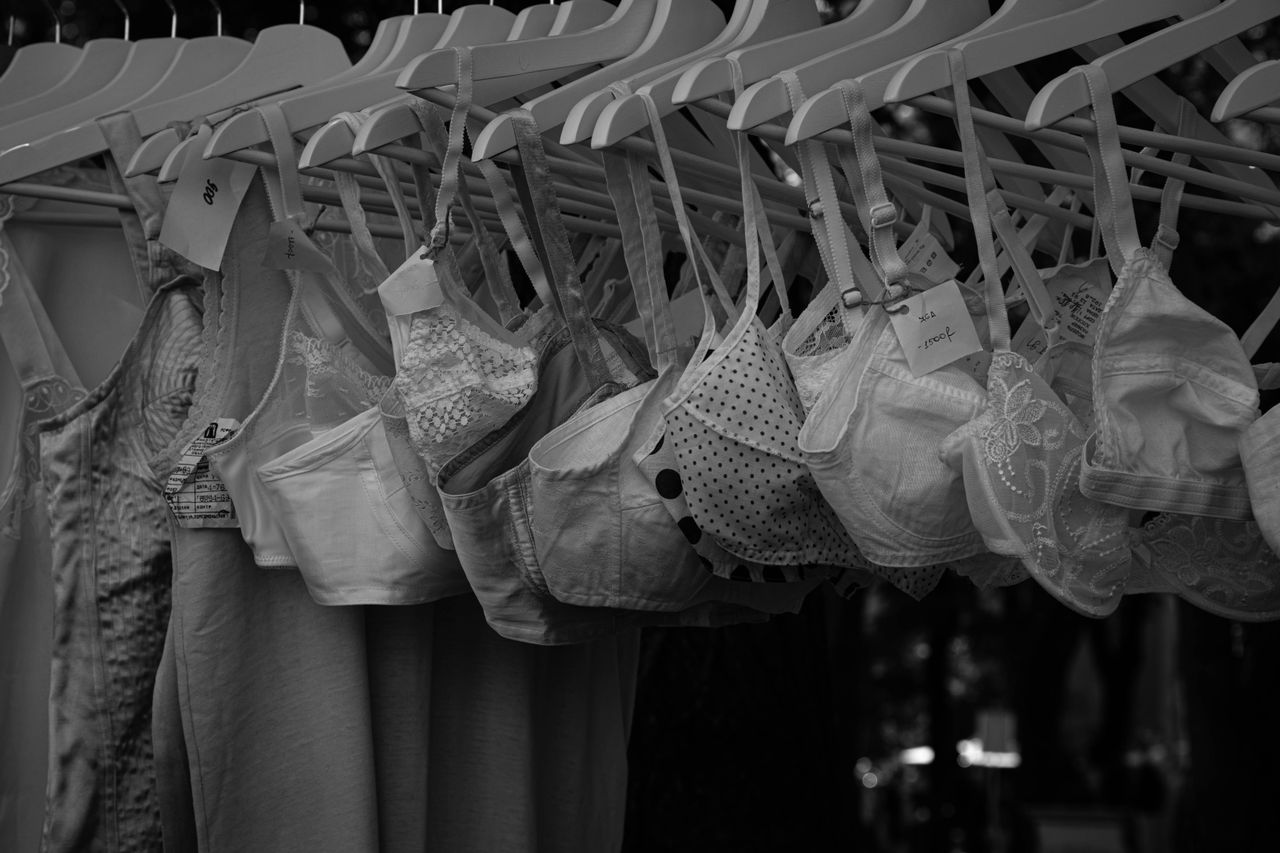
Hang one sample of each design and keep the rest in sealed packs.
Sort bins by size and label them. A tidy stall sells faster and loses less.
Protect stock from dust and sun. Faded packs sell at a discount.
Do not let customers handle unsealed pieces. Offer the sample instead.
Count stock weekly. Small items are easy to lose and easy to steal.
Permits You Need
A county business permit for the stall. Register a name if you plan to supply shops or schools.
Nairobi’s entry band is KSh 5,000 a year (PaybillKE, citing the county Finance Act 2026).
Registration takes a few days online. Follow our guide to registering a business in Kenya.
What Goes Wrong
Wrong sizes, poor fabric and stock bought for looks. Each leaves money hanging on the hooks.
- 1Too many small sizes.They stay on the hook for months.
- 2Thin fabric.One wash and the customer is gone.
- 3No exchanges.Buyers fear guessing a size.
- 4Fancy over plain.Lace looks good on display and sells slowly.
Nobody tries innerwear on. They buy the size they trust from the seller they trust.
How to Grow
Add lines bought by the same customer: nightwear, socks, vests and school items. Then supply smaller sellers.
Add products
- 1Nightwear and gowns
- 2Sportswear and leggings
- 3Baby and school packs
- 4Shapewear
Add income
- 1Wholesale to hawkers
- 2Online orders with delivery
- 3Bridal sets to order
- 4School uniform innerwear in January
Stocking on borrowed money? See what it costs in our business loans guide.
Ready to write your stock list?
List items, sizes and quantities on one page before you buy.
Written by Trailblazers
We help Kenyan entrepreneurs test business ideas before they spend. Our guides use public sources and clearly labelled assumptions.
Questions readers ask
How much capital do I need to start an innerwear business in Kenya?
About KSh 120,000 for a stocked stall. Selling packs direct can begin with KSh 25,000.
Is an innerwear business profitable in Kenya?
Yes, above about 160 pieces a month. At 300 pieces it leaves about KSh 14,083 on our model.
Where can I buy innerwear wholesale in Kenya?
From importers in Eastleigh and Kamukunji, and through distributors of Kenyan garment factories.
Can I sell second-hand underwear in Kenya?
No. Second-hand underwear was banned in 2009 over health concerns. Sell new stock.
Which innerwear sells fastest?
Cotton panties, boxers, everyday bras and socks in the middle sizes.